Export to Africa in 2026: Why the Opportunity Has Never Been Bigger

If you have ever priced a container to Lagos, Mombasa or Tema, you already know that Africa is not one market. It is 54 of them, each with its own ports, paperwork and buying habits. But step back from the day-to-day detail and the bigger picture for 2026 is hard to ignore: the case for exporting to Africa has rarely looked stronger.
Here is what the latest trade data tells us, where the demand is coming from, and what exporters should do to get ready.
Start with trade inside the continent. In its African Trade and Economic Outlook 2026, published on 30 March 2026, Afreximbank forecasts that intra-African trade will grow by around 10% this year to about $230 billion, up from $210 billion in 2025 (Ecofin Agency). The bank calls this an optimistic scenario that depends on political stability and reform, but the direction is clear. Africa's total trade with the world reached roughly $1.4 trillion last year, according to the same report.
Trade between the Gulf and Africa is moving even faster. UAE non-oil trade with Africa reached about $158 billion in 2025, up 41.6% on the year before, and Africa's share of the UAE's total non-oil trade has climbed to 15.5%, from 10.8% in 2019 (Gulf News). Country by country the story repeats itself: UAE trade with Senegal topped $751 million in the first half of 2026, up 31%, while UAE non-oil exports to Gabon more than doubled to $62.7 million over the same period.
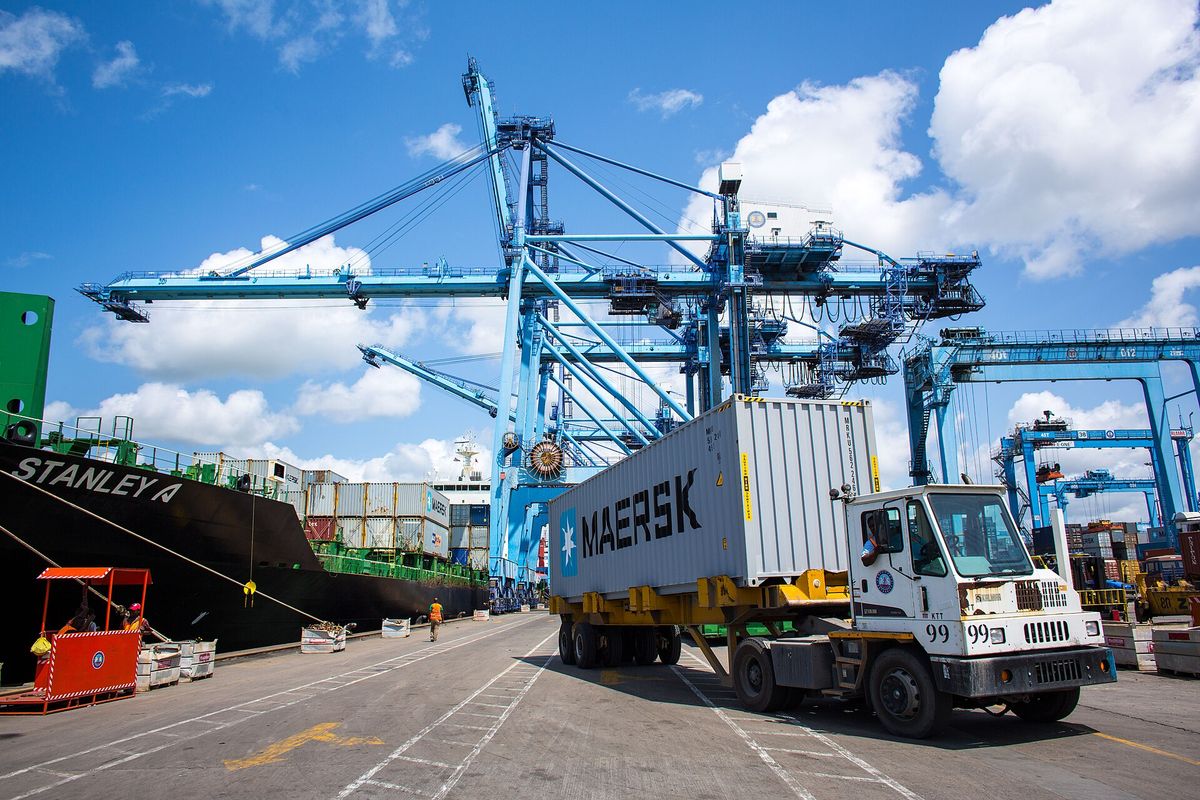
For anyone shipping cargo to Africa from Dubai or the wider Gulf, these are not abstract figures. They mean more sailings, more competition between carriers and more buyers actively looking for suppliers.
The African Continental Free Trade Area (AfCFTA) has been talked about for years. In 2026 it is finally showing up in real shipments.
Ghana is a good example. Speaking on 21 October 2026, Dode Seidu, National Coordinator of Ghana's National AfCFTA Coordination Office, said the country exported non-traditional goods to 47 African countries in 2025 under the agreement (Citi Newsroom). He was also candid that many small businesses still don't understand the opportunities available to them, which is exactly why there is room for well-prepared exporters.
Behind the scenes, the plumbing of African trade is improving too. The Pan-African Payment and Settlement System (PAPSS) is expected to cut foreign exchange costs by 20% to 30%, and governments are working to remove non-tariff barriers along key trade corridors (Ecofin Agency). Cheaper payments and smoother borders make it easier for goods that land at one African port to travel on to neighbouring markets.
Demand varies by country, but a few categories come up again and again across African import markets:
The UAE's export mix to Gabon in 2025 is a neat snapshot of this: perfumes and consumer goods, petroleum distillates and industrial equipment led the way (Gulf News).
Dubai has quietly become one of the most important launch pads for exports to Africa. Traders from Lagos to Nairobi already source goods through the UAE, and the UAE has direct shipping and air cargo links to East, West and Southern Africa. UAE investment in Africa also exceeded $110 billion between 2019 and 2024 (Gulf News).
New trade deals add to that. The UAE signed a Comprehensive Economic Partnership Agreement (CEPA) with Gabon in February 2026, part of a wider push to lower barriers with African partners.
None of this means exporting to Africa is easy. The exporters who do well are the ones who plan for the hard parts:
If you are thinking about your first shipment, keep it simple:
Africa's trade is growing, trade agreements are finally biting and the Gulf is shipping more to the continent every year. For exporters who are willing to learn the rules of each market, 2026 is a very good time to start, or to grow, your business in Africa.
Have a shipment in mind? Get in touch and we'll help you plan the route, the paperwork and the cost.
Categories: Industry News, Shipping Guides
Logistics specialists helping businesses and families ship cargo to Africa.